
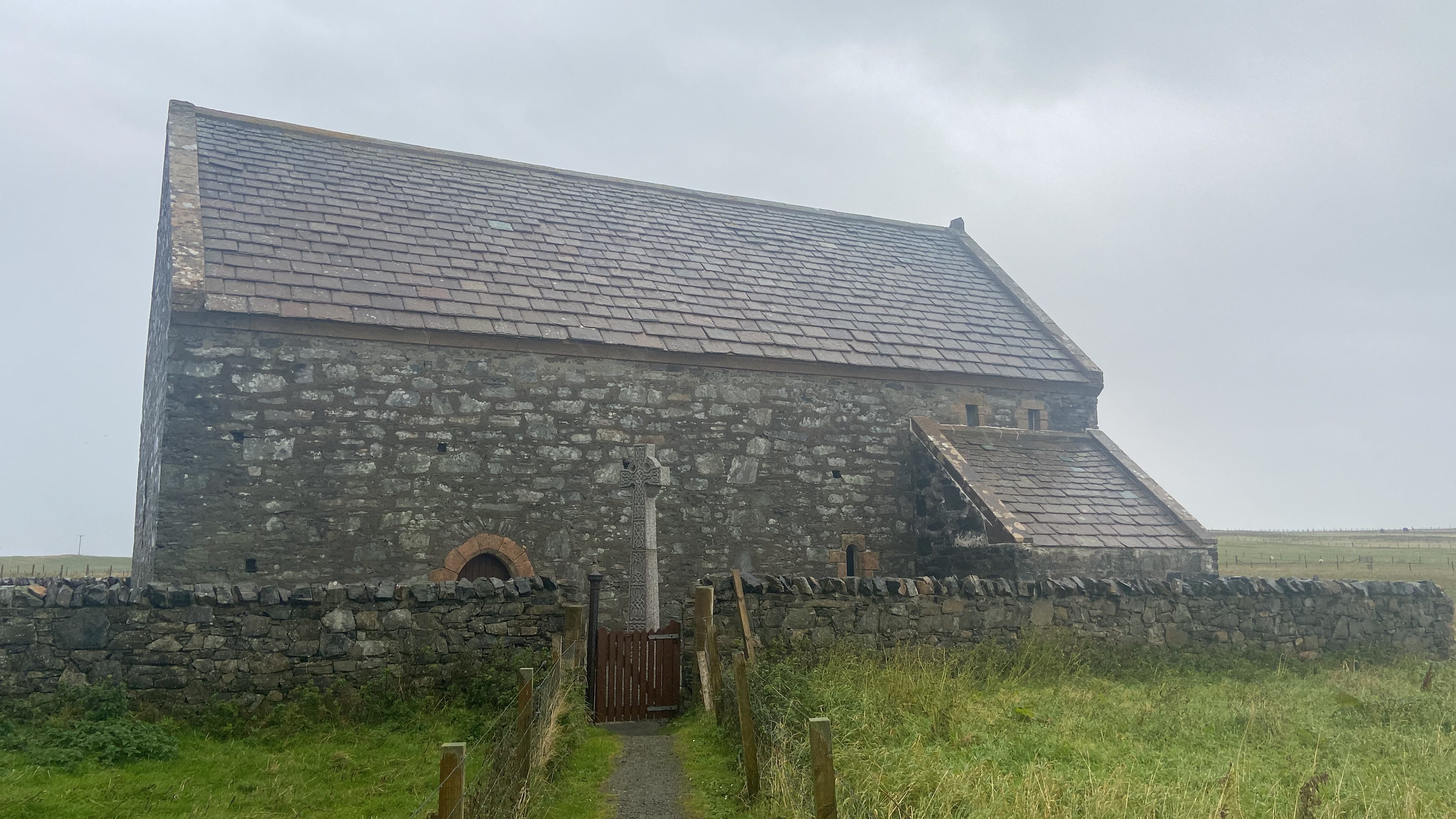
People still come to this same place - Teampall Mholuaidh (St Moluag’s) in Ness, Lewis - for the same reason they did hundreds of years ago. To be healed.
In this post I will look at the origins of the church, a site consecrated in the 6th century and rebuilt by the Vikings. We’ll look at rituals connected to the site, from tying oneself to the altar in search of healing, to an ancient fertility festival.
In this post:
The search for healing at St. Moluag’s
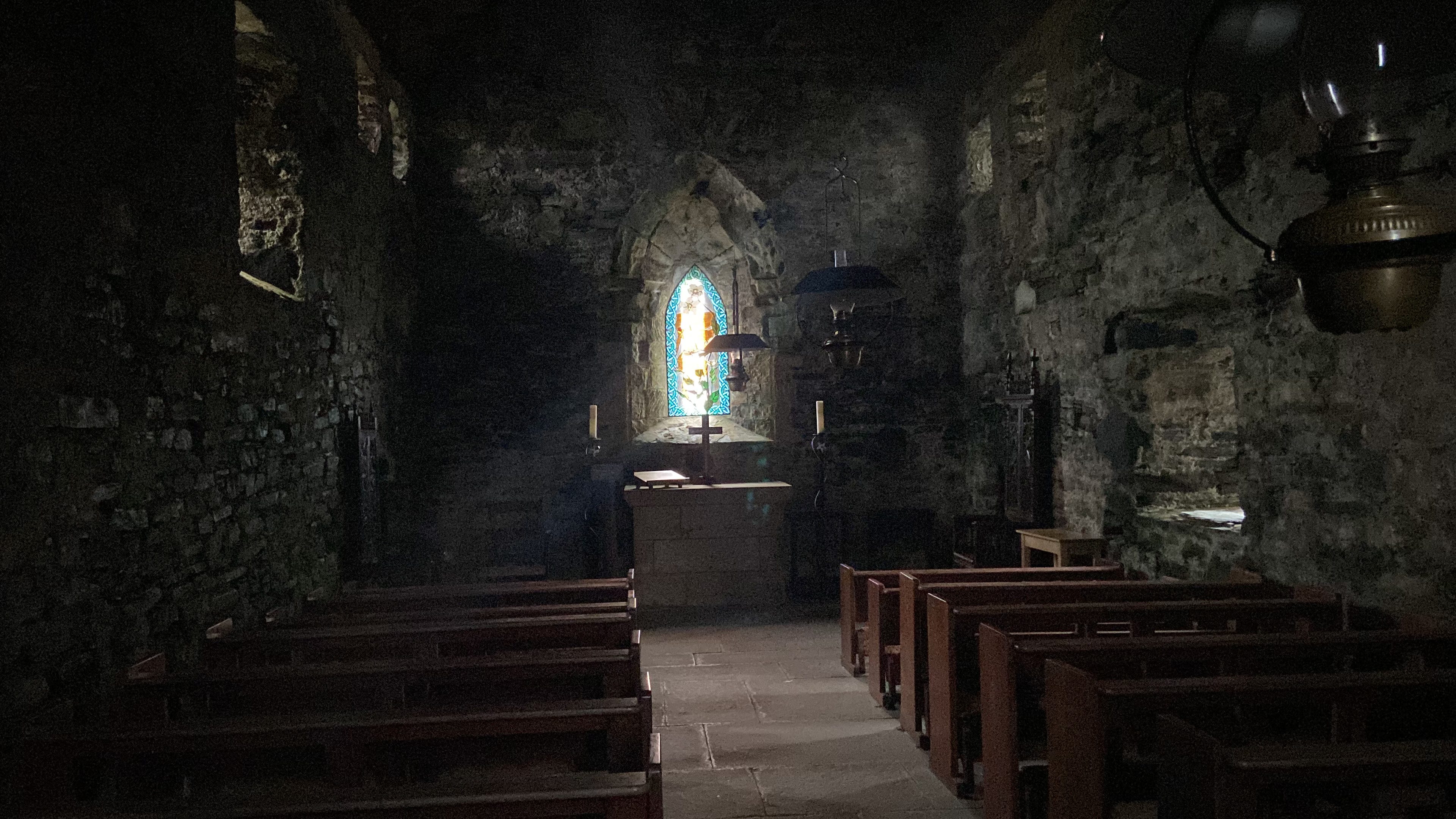
There is a board opposite the door, when you go in, where people write down what they need help with. Or they ask for help for a friend or a family member. People go through a lot.
In the past, people thought that severe mental illness could be cured if they slept for a night in the precinct of the church. But they would have to sleep. If they didn’t, they wouldn’t recover.
Some would tie themselves to the altar for the night. They would also leave replica wooden body parts on the altar, in hope of a cure.
It was also a site of other rituals, very interesting ones, which I will tell you about.
St. Moluag’s - a 6th century Christian site
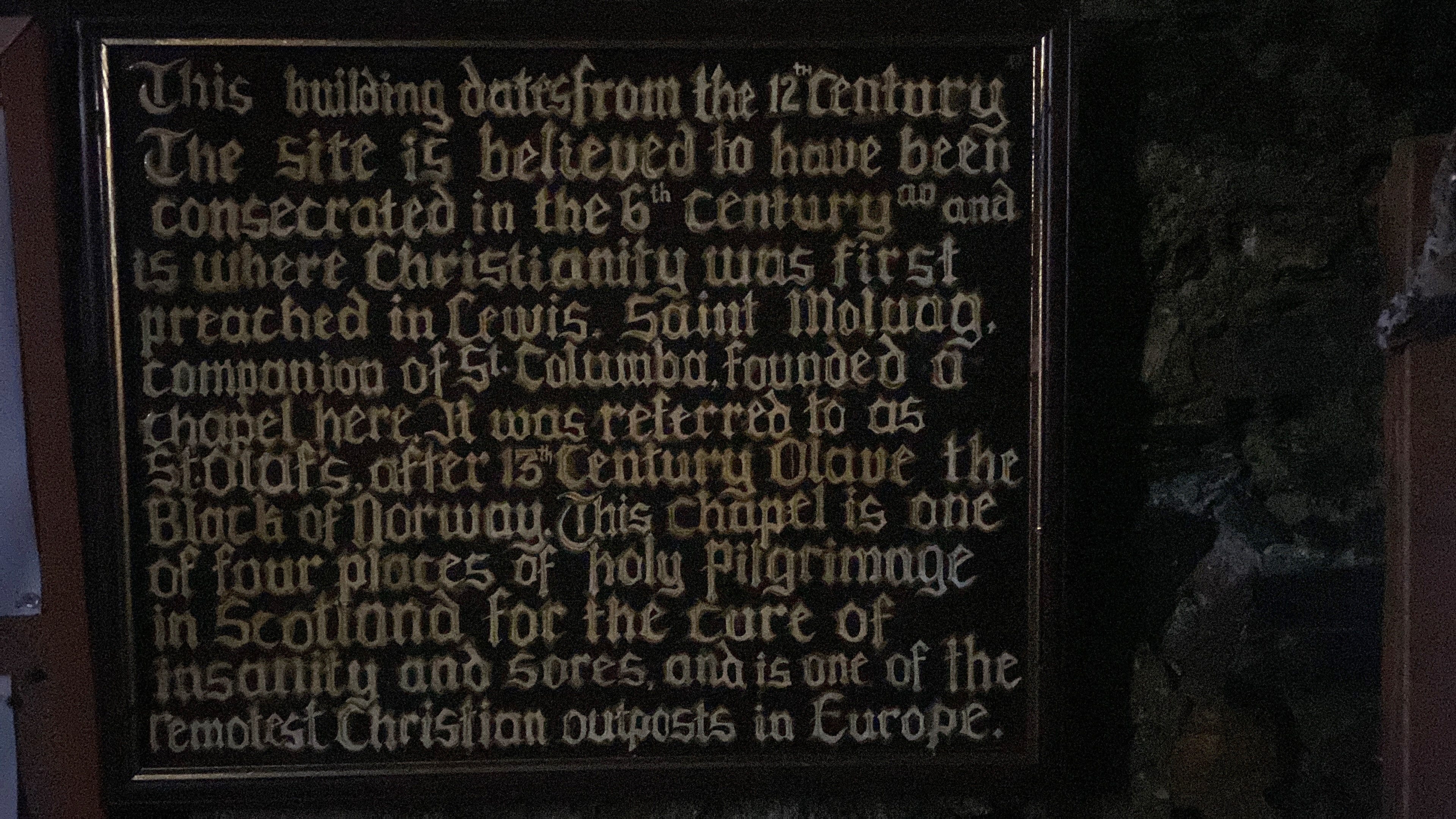
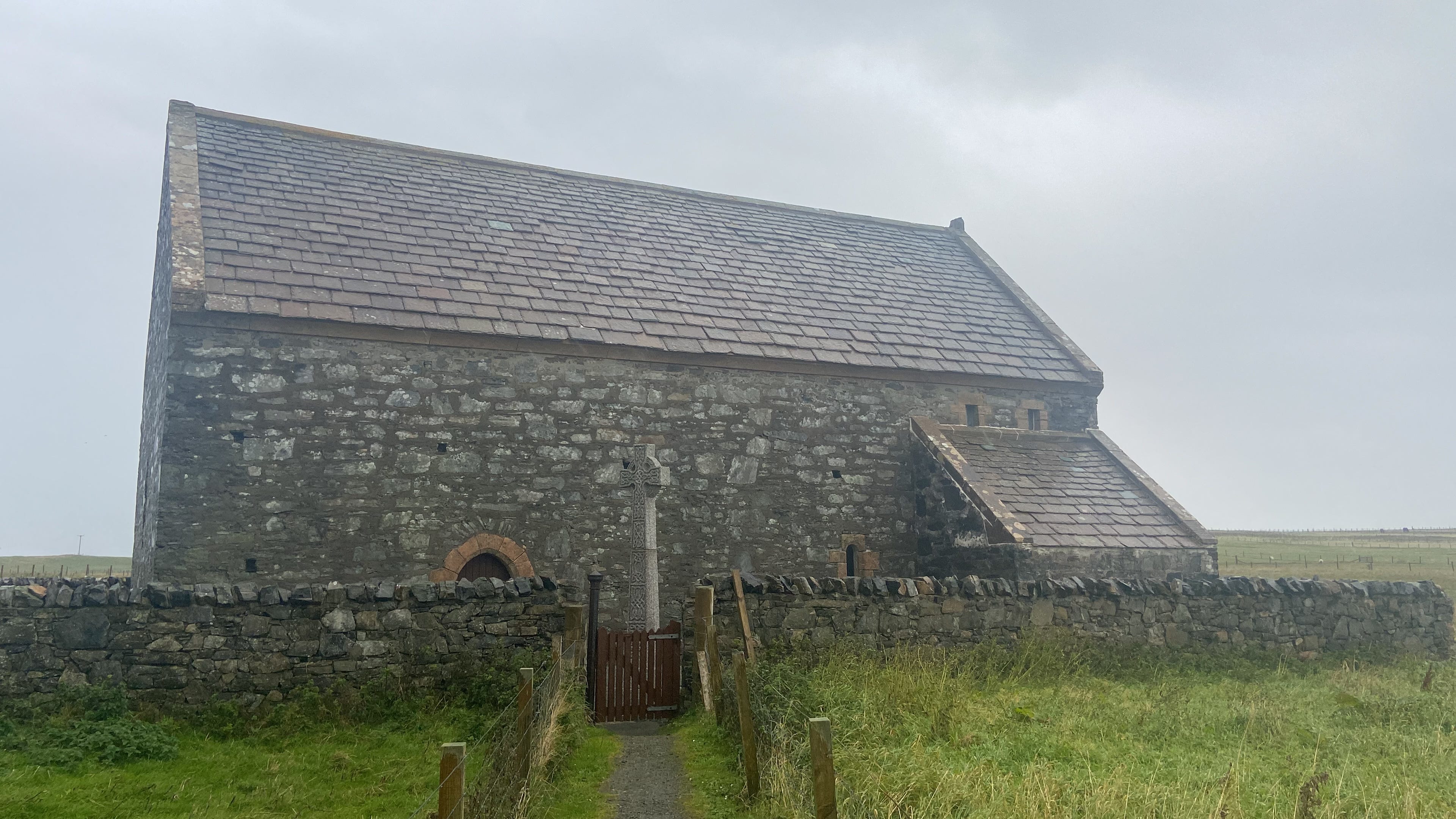
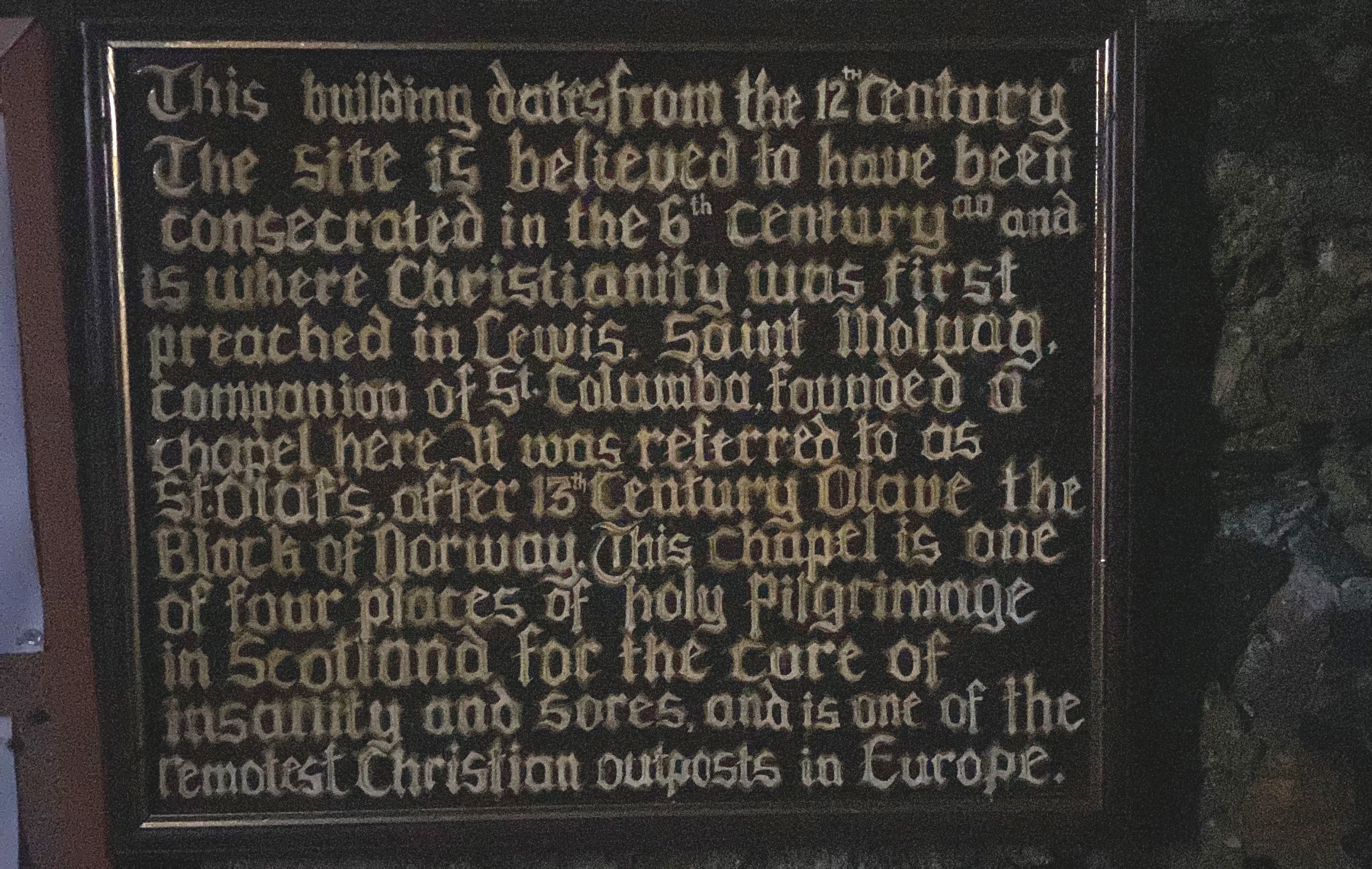
The site was consecrated in the sixth century. Archaeologists are united, within a few hundred years anyway, as to when the current building was built - sometime between the 12th to 14th centuries. Traditionally considered to be a church of the Macleods, it is similar in layout to the church in Rodel, Harris.
There is a Viking connection, of course. Miers et al (2008) believed it was built under Norse patronage on an earlier Celtic site. On a plaque in the Church itself, there is mention of Olaf the Black. And apparently the plan of the church is very similar to the Gardr Cathedral in Greenland.
Pre-reformation chapels of Lewis
There are about thirty one chapel sites on Lewis, and six on outlying islands - Rona, Sùlaisgeir, the Flannans and the Shiants. Three for Peter, three Columbas, two for Mary, one for Bridget and many others.
It is the only pre-Reformation church on the Isle of Lewis still standing and with a roof. It was being used as a shelter for sheep until money was raised to renovate it in 1912.
It also has some other interesting stories connected to it.
An ancient fertility festival connected to the site
When Martin Martin visited Ness in 1695, he wrote that within living memory, it was the site of a fertility festival on All Saints’ Day (1st November). The festival was for the sea-god Shony.
Someone would wade out into the sea and pour ale into the water, as an offering. And then they’d all take a dram. Captain John Dymes wrote this in 1630:
Their custom was to eat and drink until they were drunk, and then, after much dancing and flirting together, they entered the chapel at night with lights in their hands and stayed there until the next morning in devotion.
For a long time, there was a stone cross in the church which had originally come from the island of Rona - one of only two such Christian Norse pieces found on Lewis. It’s pretty special. (The Episcopalian Church took it away from the island until a concerted campaign to have it reinstated managed to have it returned, and it is now at the local historical society.)
The cross is also connected to fertility. Let’s just say there’s a very excited man carved on it.
Dymes also says :
Inside the chapel there is a sanctum sanctorum which is considered so holy that none of their women are allowed to enter it. Any pregnant woman does not dare to enter the chapel at all, but instead goes to certain places outside to say her prayers.
Given that the site was so connected to fertility, to make pregnant women sit outside is pretty harsh. Like a Mediaeval Ryanair.
Healing wells of Ness
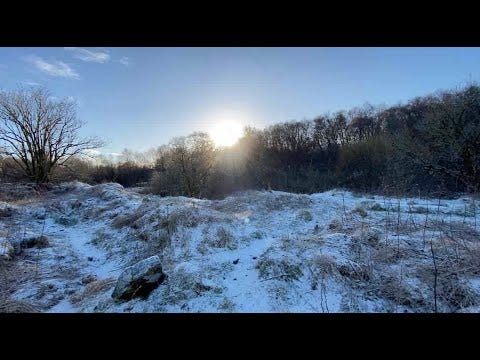
A nearby well, St. Rònan’s well, was also known as a place to go for a cure from mental distress. St Rònan’s Chapel - Teampull Rònain - is nearby and can be seen from St Moluag’s. Grass covered now.
Different wells were for different ailments and there were different ways to behave at different wells - whether that was to walk around it sunwise, to drink the water in a certain way or to leave an offering.
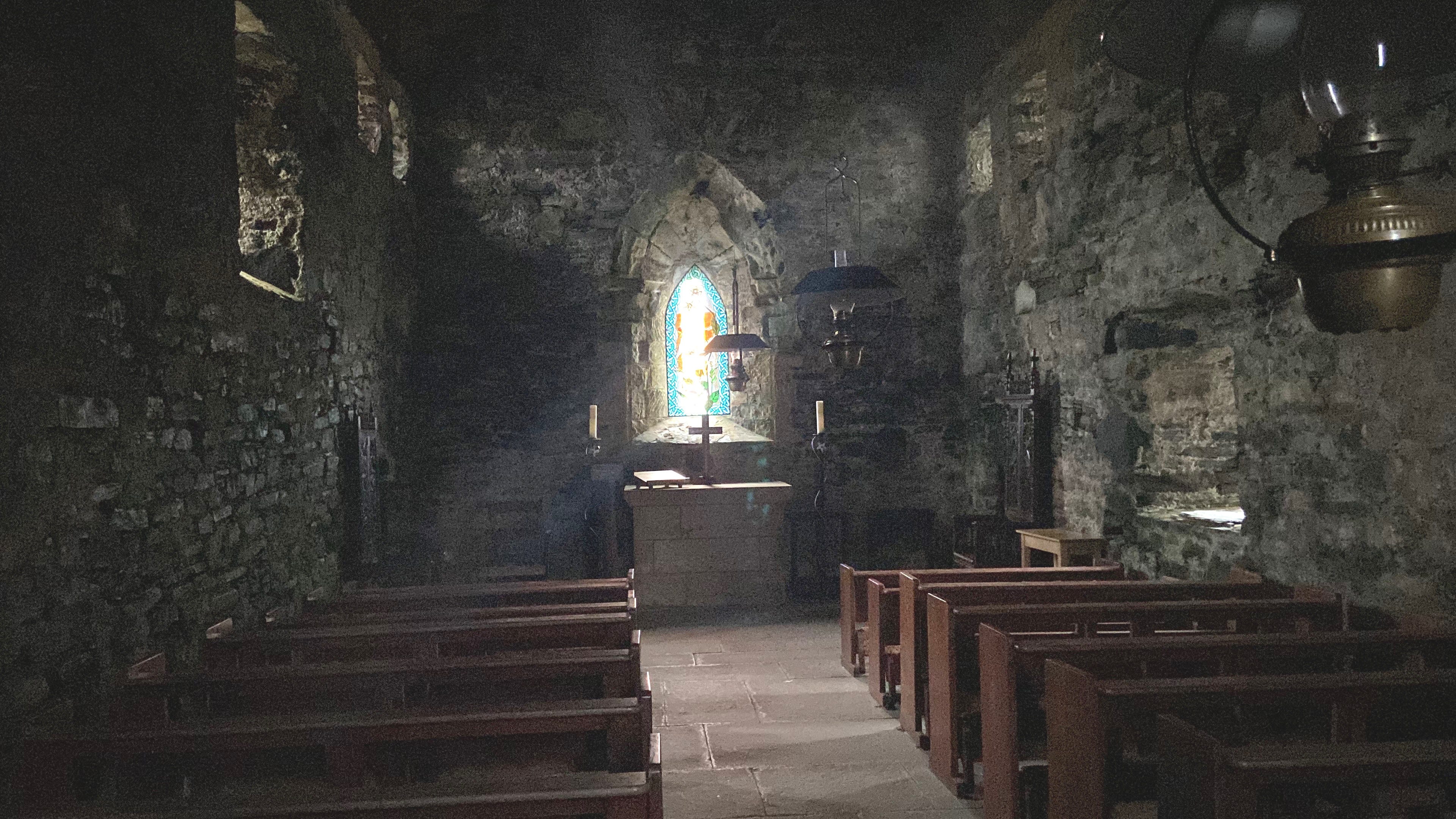
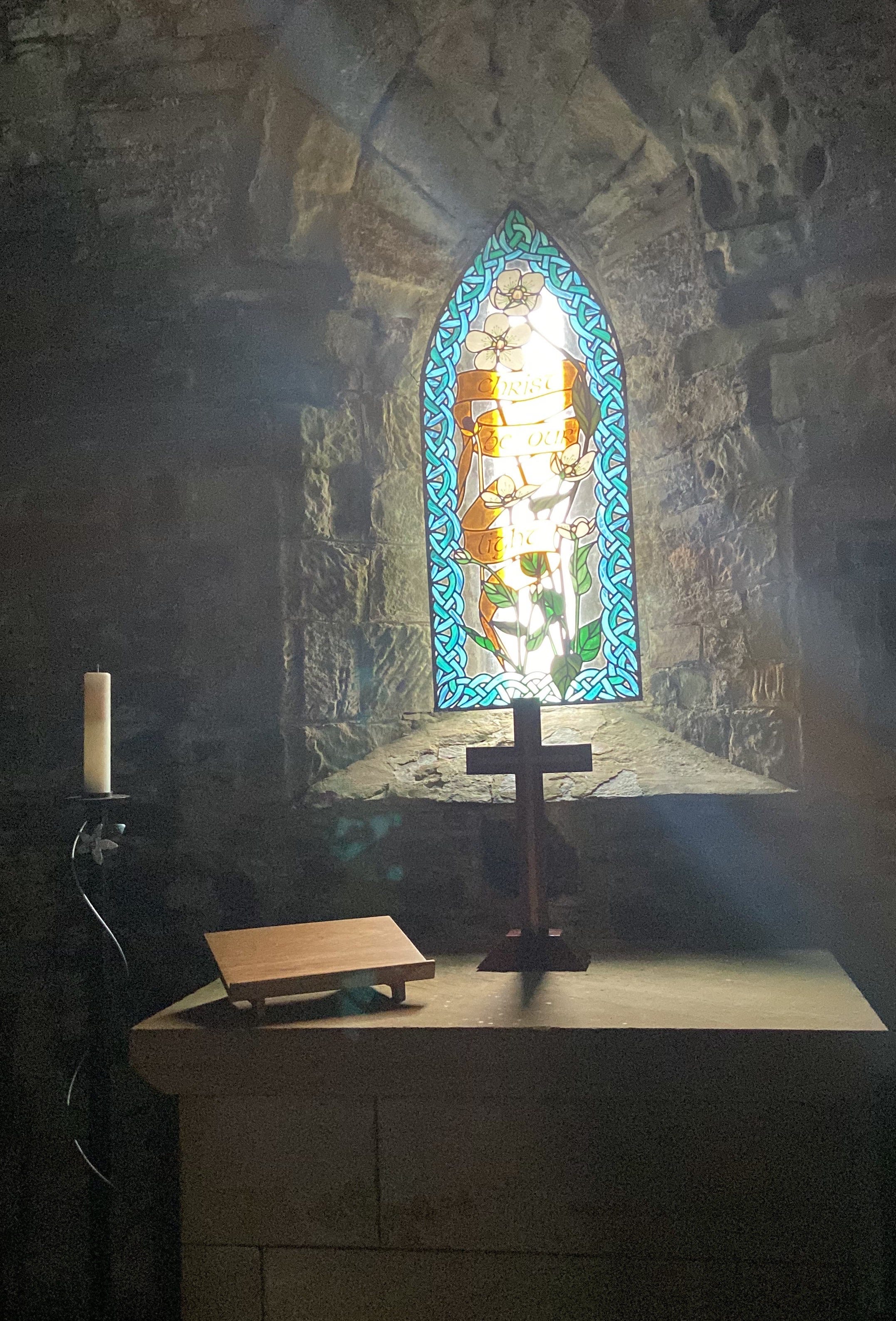
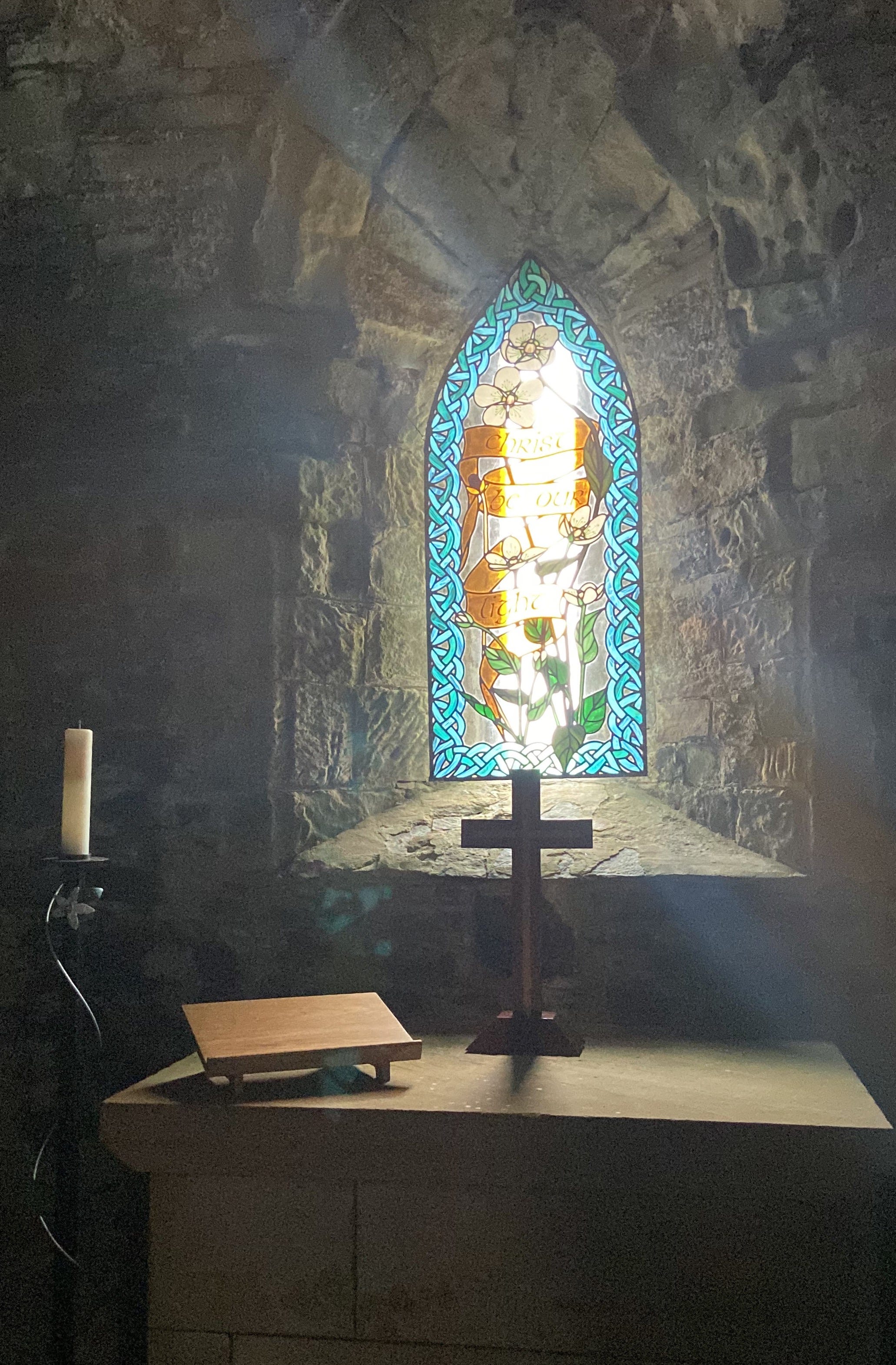
The Hill of Blessings is nearby, as are three other similar chapels. And if for some reason you cannot visit, I have taken a couple of photographs for you.
How to visit St. Moluag’s and more information
Here is a Google Maps link to find the location of St. Moluag’s.
For a great piece of writing on the subject, there is the Lewis Coastal Chapel-sites Survey (LCCS) by Rachel C. Barrowman (2020).
And also Dr Finlay Macleod’s book - The Chapels and Healing Wells of the Western Isles.
Thanks for reading and look after yourselves.
Gaelic Version - Teampall Mholuaidh ann an Nis
Tha daoine air a bhith a’ tighinn an seo - Teampall Mholuaidh ann an Nis - bho ùine nan creach airson leighis a lorg.
Tha àite air a’ bhalla làn pìosan beaga pàipear, mun coinneimh an dorais nuair a thig thu a-steach. Bidh daoine a’ sgrìobhadh an sin, na tha a’ cur orra. No, bidh iad a’ faighneachd as leth caraid no teaghlach. Tha daoine a’ dol tron an t-uabhas.
Anns na seann làithean, bhathas an dùil gum faigheadh tu faochadh bho galair-inntinn, nan caidleadh tu oidhche am broinn crìochan na -eaglaise. (Bha aig dine ri cadal, no chan obraicheadh e.)
Bhiodh cuid a dhaoine gan ceangal fhèin chun na h-altair airson na h-oidhche. Dh’fhàgadh cuid eile samhail ann am fiodh airson am pìos dhen bhodhaig a bha a’ cur dragh orra air an altair - agus iad an dòchas gun slànaicheadh sin iad.
Tha eachdraidh eile a tha garbh inntinneach ceangailte ris an àite, innsidh mi dhut mu dheidhinn.
Chaidh an làrach a dhèanamh coisrigte anns an siatheamh linn (mu 560 C.E, thathas an dùil). ‘S ann le sliochd MhicLeòid a bha e, gu traidiseanta, agus tha cruth air coltach ris an eaglais ann an Roghadal, sna Hearadh.
Tha airc-eòlaichean ag aontachadh gu ìre (am broinn dà cheud bliadhna co-dhiù), air cuin a chaidh an togalach (mar a tha e) a thogail.
Bha ceangal ri na Lochlannaich - le Miers at al (2008) an dùil gun deach a togail le na Lochlannaich air làrach Cheilteach. Sgrìobhte san eaglais fhèin, tha teacsa ag ainmeachadh Olaf Dubh. Agus tha làrach na h-eaglaise gu math coltach ri t’ èile anns a’ Ghraonlainn - Àrd-Eaglais Gardr.
Tha timcheall air trichead ‘s a h-aon làrach seann teampaill air Eilean Leòdhais, agus sia eile eadar Rònaidh, Sùlaisgeir, na h-Eileannan Flannach agus na h-Eileannan Mòra. Tha iad air an ainmeachadh às dèidh diofar Naomhan - tha trì ann airson Peadar, trì airson Colmcille, dhà airson Màiri agus mar sin air adhart.
‘S i an aon eaglais a tha air fhàgail le mullach, bho ro àm an Ath-Leasachaidh ann an Leòdhas. Bho dheireadh thall bhathas ga cleachdadh mar fasgadh airson caoraich gus an do thog iad airgead ann an 1912 airson a dhèanamh an àirde.
Tha gu leòr sgeulachdan inntinneach eile ceangailte ris an àite.
Nuair a thadhal Màrtainn Màrtainn air an àite ann an 1695, sgrìobh e gun robh nàdar fèill ann ceangailte ri torrachas air Là nan Naomh Uile. Bha e seo ceangailte ri Shony, seann Dia na mara.
Bhidh cuideigin a’ coiseachd a-mach dhan mhuir, suas chun an cuid meadhain, agus a’ dòrtadh leann air an uisge. An uair sin, ghabhadh iad drama. Thuirt an Capitein John Dymes ann an 1630:
Their custom was to eat and drink until they were drunk, and then, after much dancing and flirting together, they entered the chapel at night with lights in their hands and stayed there until the next morning in devotion.
Airson ùine mhòr, bha crois shnìomhte uabhasach breagha ann, a thàinig à Eilean Rònaidh. Cha deach ach aon eile coltach rithe a lorg air an eilean, bho àm nan Lochlannach. Tha i sònraichte dha-rìribh. (Thug an Eaglais Easbaigeach air falbh bhon eilean i, ach tha i a-nis ann an Comann Eachdraidh Nis, an dèidh iomairt a faighinn air ais.)
Tha a’ chrois seo cuideachd ceangailte ri torrachas. Tha fear ri fhaicinn air a’ chrois a tha gu math toilichte leis fhèin. Cha chan mi an còrr.
Cuideach thuirt Dymes:
Inside the chapel there is a sanctum sanctorum which is considered so holy that none of their women are allowed to enter it. Any pregnant woman does not dare to enter the chapel at all, but instead goes to certain places outside to say her prayers.
Leis gu bheil an làrach cho ceangailte ri torrachas, tha e rudeigin diobhalta gun robh iad a’ toirt air boireannaich bhochda a bha trom suidhe a-muigh, coltach ri Ryanair nam Meadhan Aoisean.
Tha tobar faisg air làimh cuideachd, Tobar Rònain, far am biodh daoine cuideachd a’ dol airson leighis airson tinneas-inntinn. Chì thu à Teampall Mholuaidh i.
Tha Cnoc a’ Bheannaich meadhanach faisg, agus ann an Nis, tha trì teampaill eile. ‘S fhiach e thadhal orra. Agus mura bheil sin comasach, tha mi air dealbh no dhà a thogail dhuibh.
Tapadh leibh airson leughadh agus thoirt an aire oirbh fhèin.
Airson sgrìobhadh air leth a leughadh mun chuspair, bhithinn a’ moladh an Lewis Coastal Chapel-sites Survey (LCCS)” le Barrowman, R C (2020).
Agus cuideachd an leabhar aig Dr Fionnlagh Macleòid - The Chapels and Healing Wells of the Western Isles.
Rinn mi cuideachd bhideo mu làrach sònraichte eile - Eilean Chaluim Chille air an Eilean Sgiathanach.
Bha sinn ann uaireigin - tha i breagha -ach cha robh fios am gun robh trì eile ann an Nis. Ach na boireannaich bhochd!