
Gaelic version below.
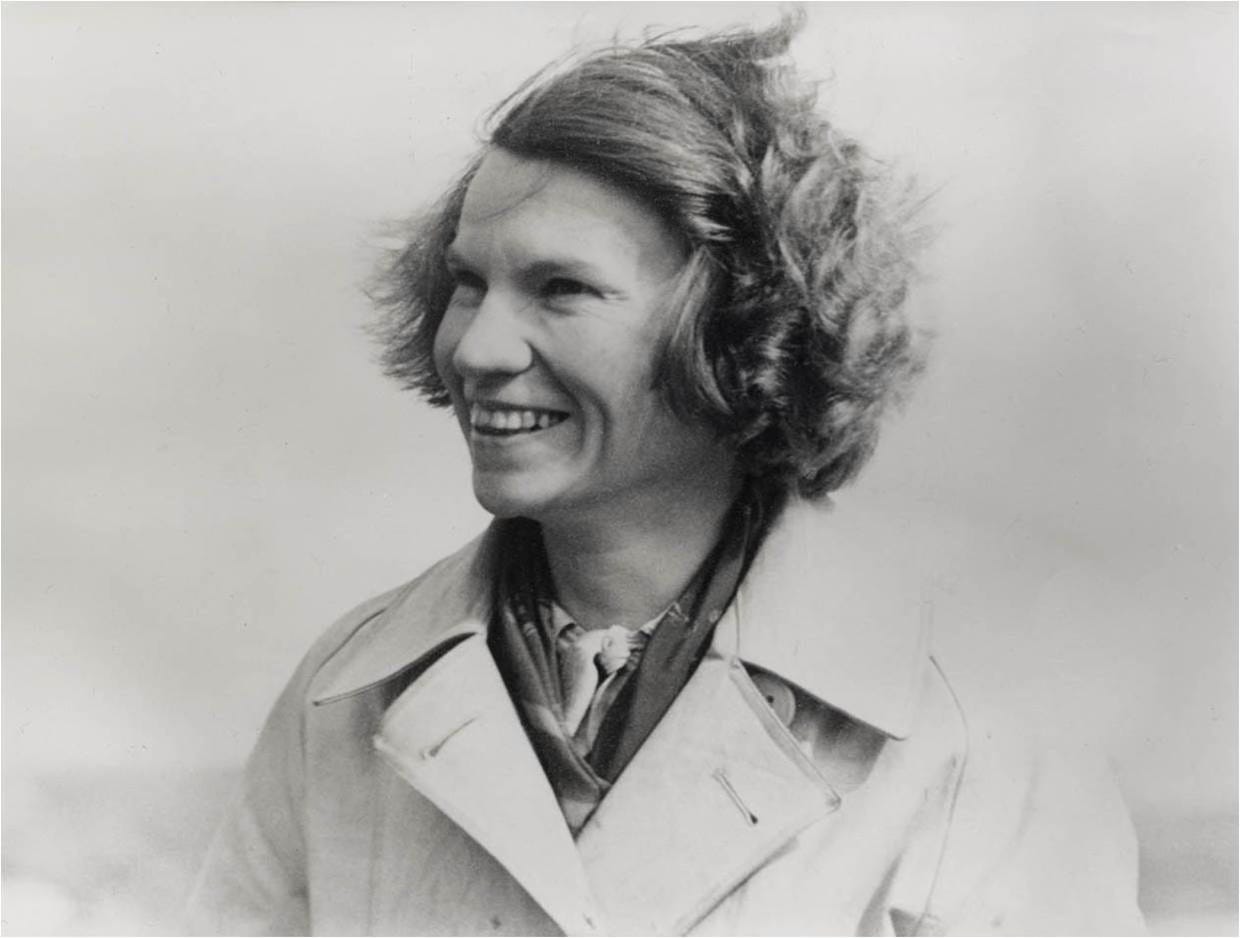
I met Margaret Fay Shaw in Canna just after her hundredth birthday. We were filming her for a television programme. We spent three days together with her, filming and talking, with Aonghas Pàdraig Campbell asking the questions. It was one of the things I most enjoyed doing.
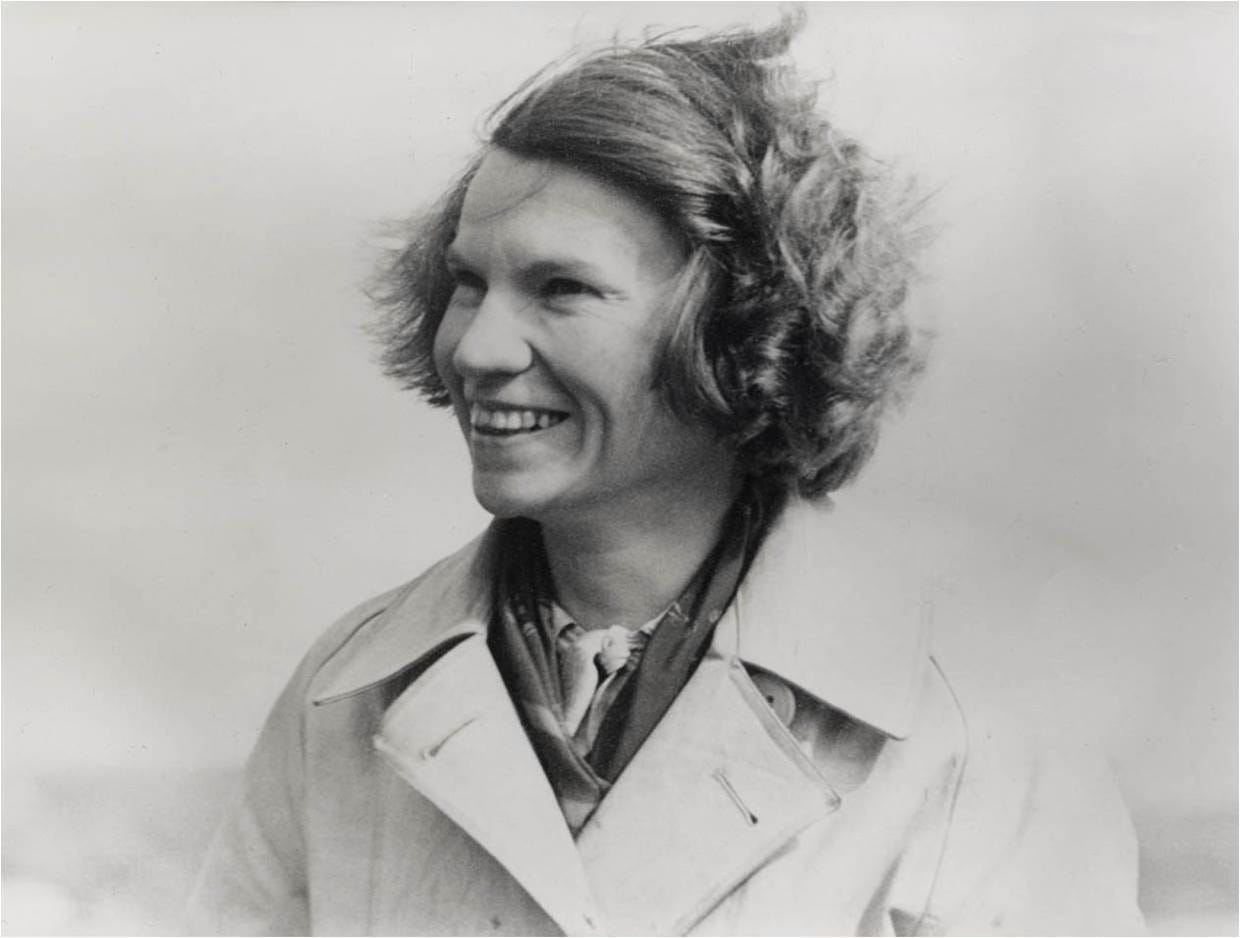
She was born in 1903 in Pennsylvania to a family with money. She was orphaned and in the 20s she travelled to attend school in Scotland, in Helensburgh. Then she came across the work of Marjory Kennedy-Fraser, who had collected and arranged Gaelic songs.
Margaret Fay Shaw went to the source. She travelled to South Uist in the 1920s. She lived in Lochboisdale for a while but found:
…there was not the opportunity for a beginner to speak Gaelic and observe crofting life. But not long after my arrival I was invited to dinner where my host... asked two sisters, cousins of his, to sing to his guests. Their voices were clear and true and their songs were golden.
She asked one of the sister to teach her a Gaelic air, and the reply was that she would, if she would come to their house in Glendale.
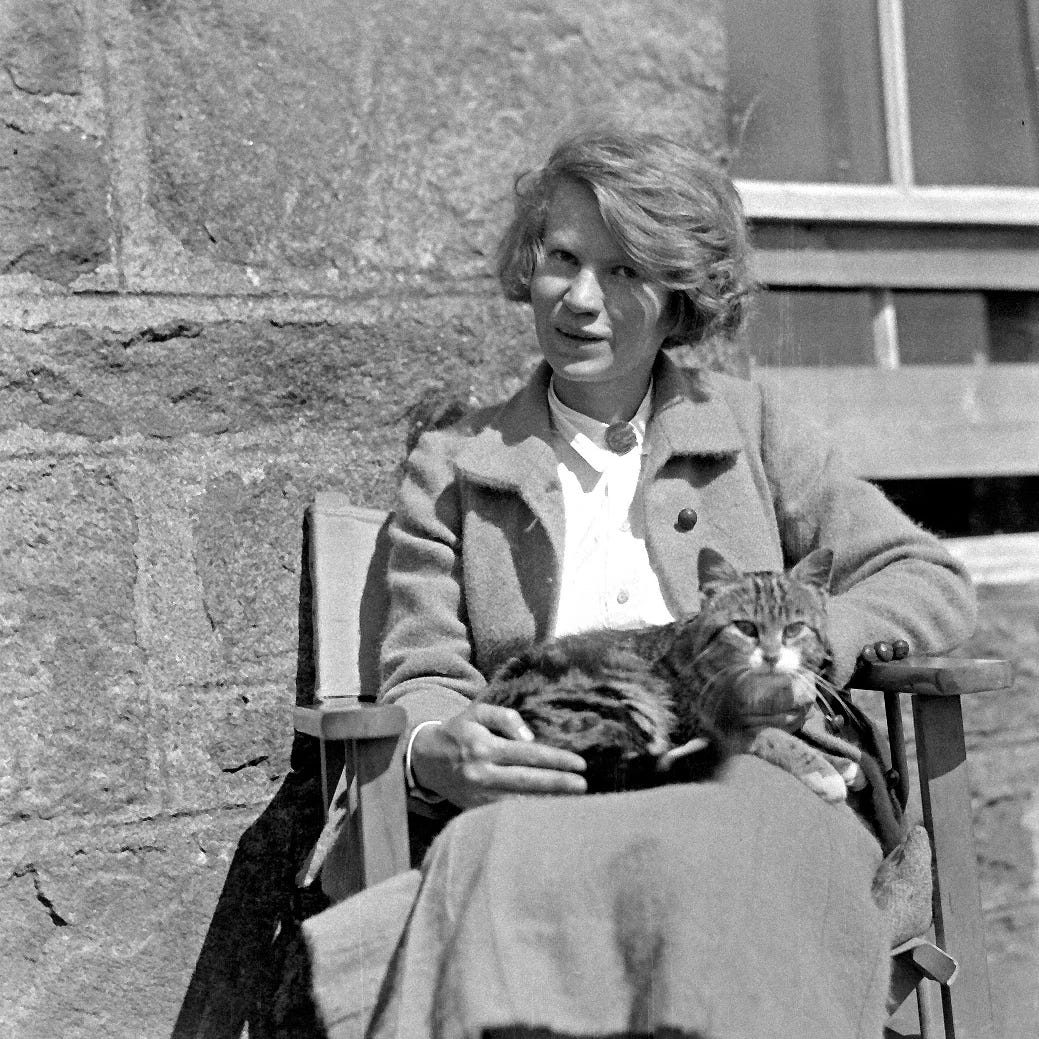
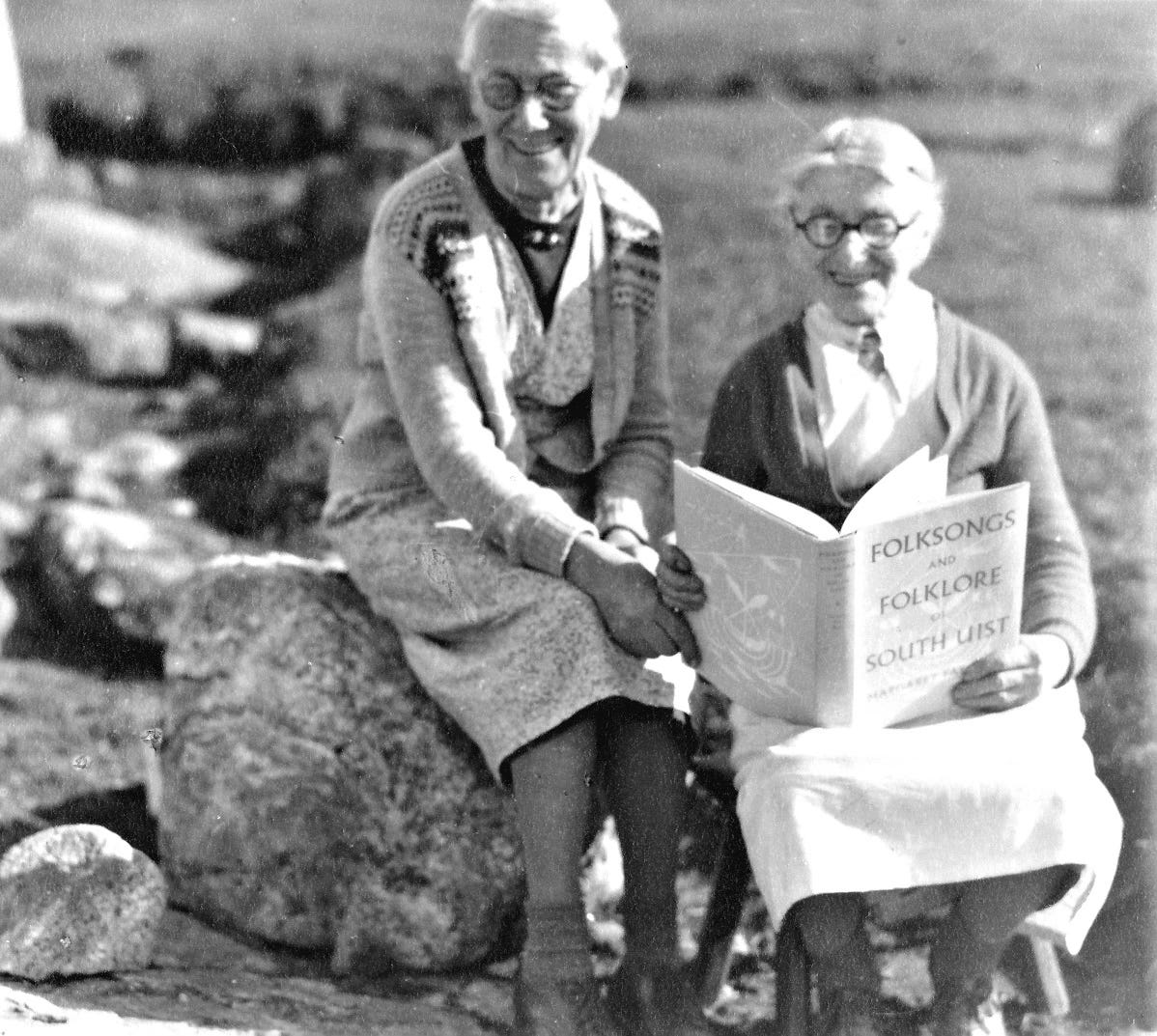
On a sharp, cold January morning with the land white with frost, I crossed Loch Boisdale in a sail-boat and walked the path to the cottage of Peigi and Màiri MacRae, where I was soon to make my home for the rest of my years in South Uist.”She talked about when she was young, her family in Pennsylvania, her moving to Scotland and how she became interested in Gaelic song. Eventually, in the 1920s, she moved to South Uist to learn Gaelic and the songs. She lived with two sisters, Màiri and Peigi Anndra, who shared their songs with her.
Her book “Folksongs and Folklore of South Uist” is an amazing collection of songs, folklore, traditions and stories which came out of that.
We would film a little, then she would get up and play the piano for a while. Or she would stop for a little smoke. At eleven o’clock each day, she would leave, and return with a tray full of glasses of whisky. The soundman cretainly didn’t ‘put them to his ear’.
Margaret would also spend some time each day on the typewriter, writing letters. It was an ‘Imperial’ typewriter, I think, that she had got from Compton Mackenzie in 1962. She would type just the way she played the piano. I said that to her and she replied, “Yes… and I spell by ear extremely well.”
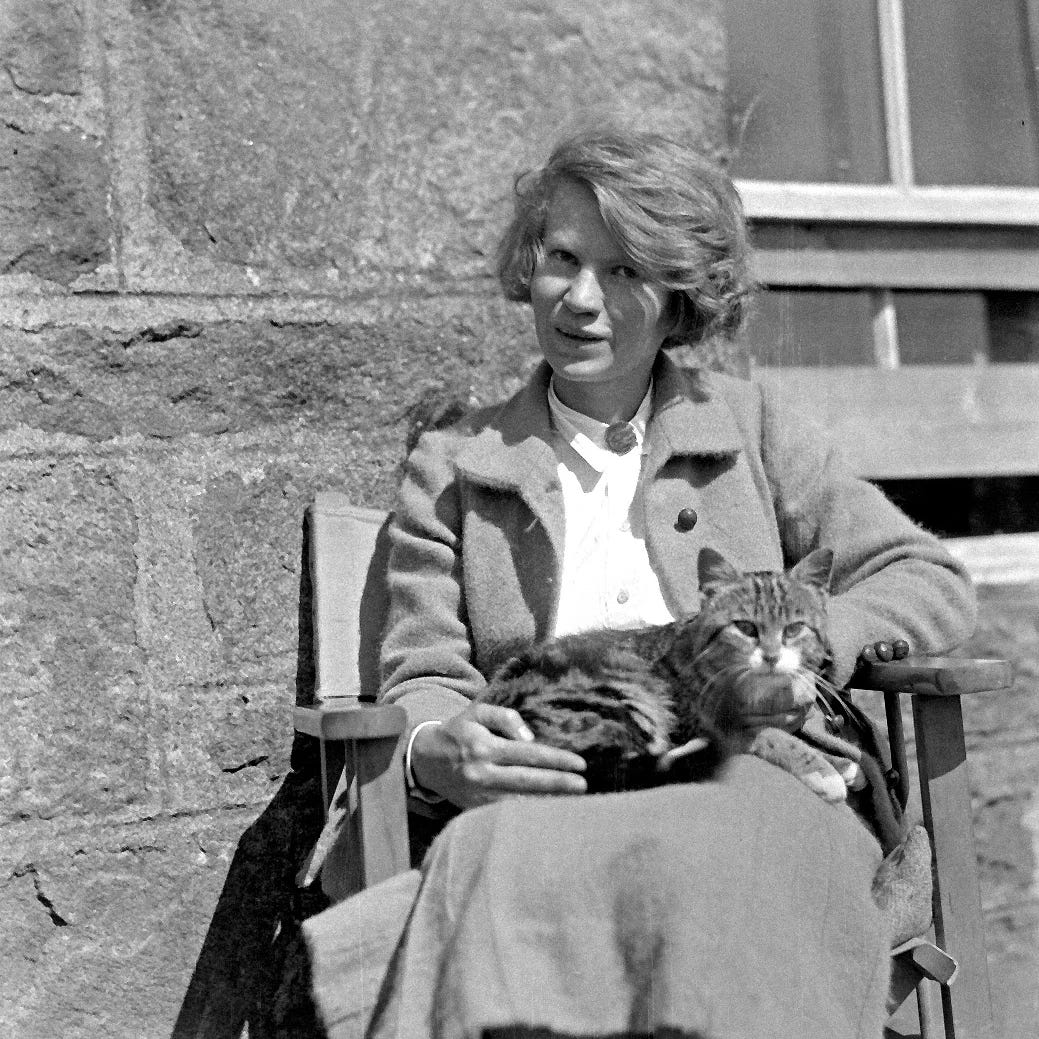
She had a beautiful piano upstairs and I said to her, I like that piano. ‘Broadwood’ was written on it. She said, “Yes, it used to belong to Beethoven.” Oh yes, I said... Beethoven....
There were many things like that, around every corner in the house. I asked about some unusual mirrors that were there, and she said the frames had been made by French POWs from beef bones, around the time of the Napoleonic War.
She was an incredible collector. Here is a post about some of the Gaelic lullabies she collected - and why these songs weren’t just for putting babies to sleep.
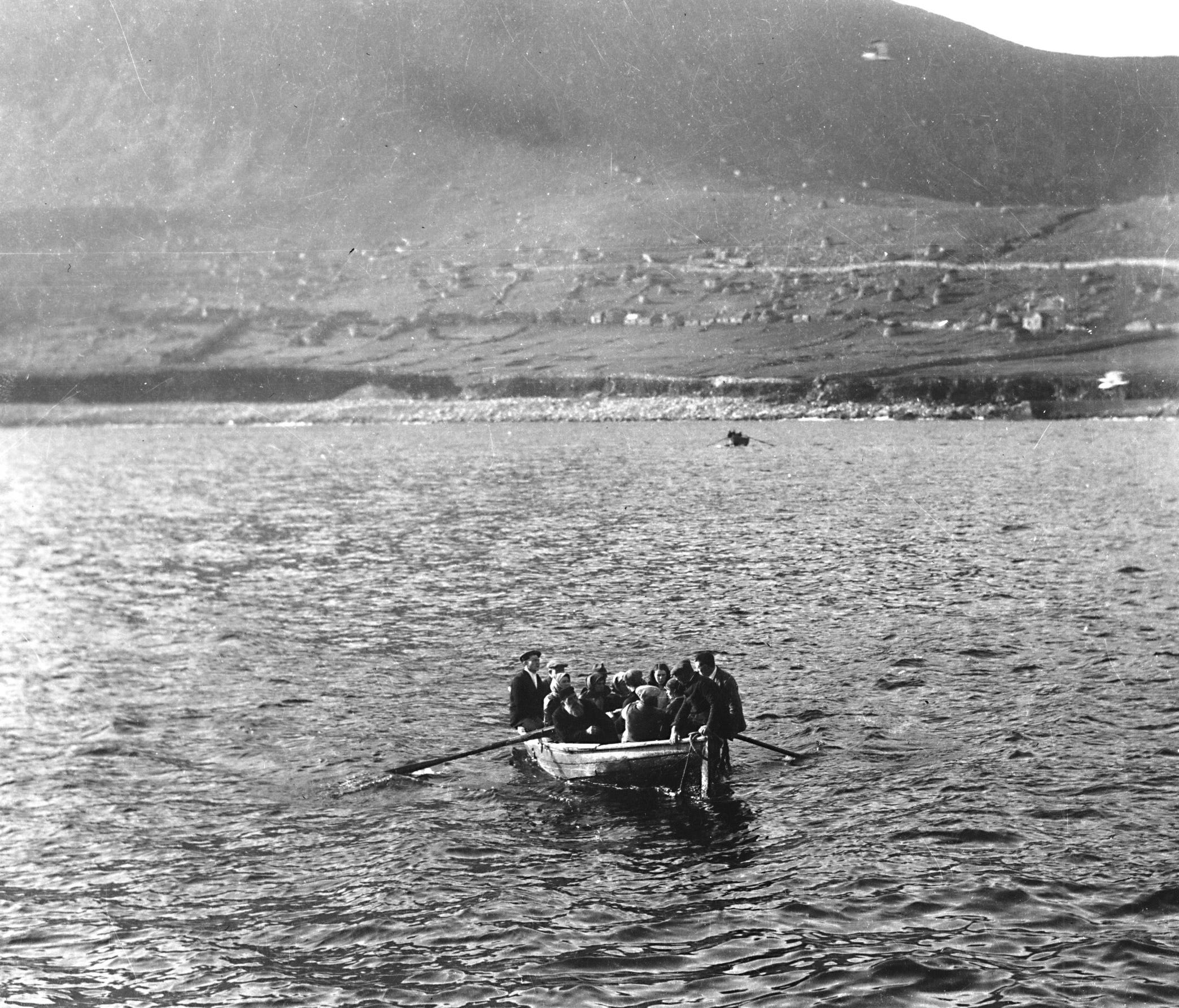
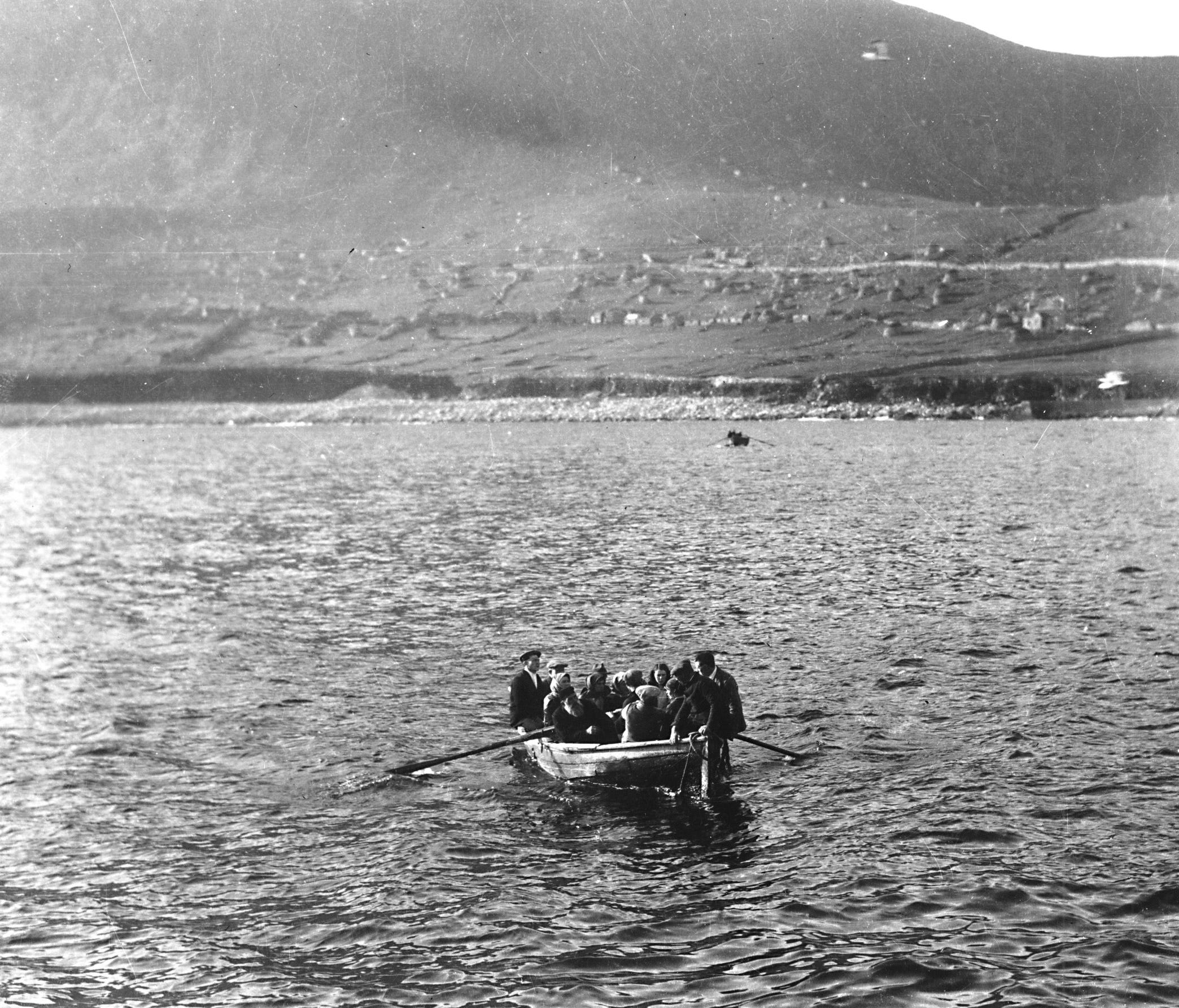
I was working on something about St Kilda at the time, and she said she had photographs. She brought out these photographs from the day in 1930 when the St Kildans left the island. She was there. There are more than nine thousand negatives in her archive. I think she should be better known as a photographer.
But it was just how much she loved life, and how much she loved being amongst people, that has stayed with me most. She said she was as hard as Pennsylvania steel, and she had to be, to do what she did.
The book ‘Folksongs and Folklore of South Uist” is a jewel. But I can imagine that it wasn’t an easy journey. I imagine that plenty of people questioned what she was doing. A young woman from Pennsylvania, from a family with money, living in a blackhouse, using her hard won musical talent to notate Gaelic songs. Luckily for us, she was “made of Pennsylvania steel.”
Margaret Fay Shaw knew the true value of it. We are lucky she did, or so much more would have been lost. I have written more in another post about this called Gaelic Lullabies. Margaret was one of two musicologists, the other being Frances Tolmie, without whom so many of these songs would have been lost. And Gaelic lullabies are decidedly interesting… As the academic Barbara Hillers put it :
If we examine the traditional folk lullaby… we encounter a picture that is far from idyllic. Many oral-traditional lullabiesdeal with unhappiness, loss, violence, and death.
It is something I have been thinking of. Documenting and recording people who are here now. I have done enough of it to realise that over time, the voices of these people also become golden.
This is the last thing she said to me:
“Life. Wonderful life. But you’ve got to do it yourself. You’ve got to do it all the way yourself.”
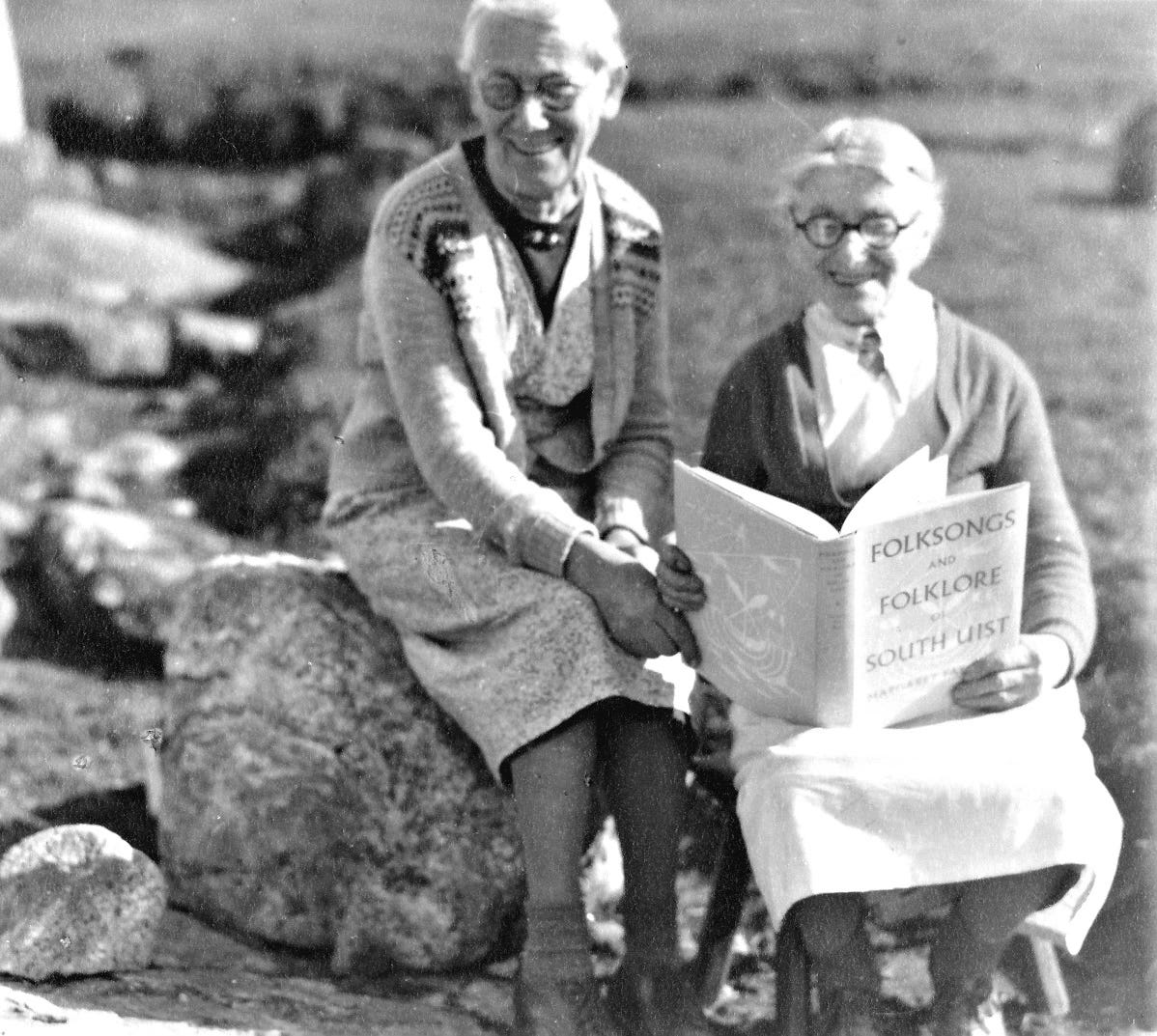
Here is a photograph of the tradition bearers Màiri and Peigi Anndra with Margaret’s book. Isn’t it wonderful.
GAELIC VERSION
Choinnich mi ri Margaret Fay Shaw ann an Canaidh nuair a bha i ceud bliadhna a dh’aois. Bha sinn ga filmeadh airson prògram telebhisean. Chuir sinn seachad trì latha còmhla rithe a’ filmeadh agus a’ còmhradh, Aonghas Pàdraig Caimbeul a’ cur nan ceist. ‘S e aon de na rudan as motha a chòrd rium a rinn mi.
Bhruidhinn i mu dheidhin làithean a cuid òige, an teaghlach aice ann am Pennsylvania, mar a ghluais i a dh’Alba agus mar a dhùisg a cuid ùidh ann ann òrain Ghàidhlig. Anns na ficheadan, ghluais i a dh’Uibhist a Deas. Tha an leabhar aice “Folksongs and Folklore of South Uist” làn dhe na h-òrain sin, beul-aithris, sgeulachdan agus fios mun chultar.
Bhiodh sinn a’ filmeadh beagan, an uair sin, bhiodh e ag èirigh agus a’ cluich a’ phiana airson dreis. No bhiodh i a’ stad airson smoke bheag. Aig aon uair deug gach latha, dh’fhalbhadh i, agus thilleadh i le tray làn gloinnichean uisge beatha. Chan ann gu chluais a bha am fear air fuaim ga chur.
Bhiodh i dreis gach latha air typewriter, a’ sgrìobhadh litrichean. ‘S e typewriter ‘Imperial’ a bh’ ann, tha mi a’ smaoineachadh, a fhuair i bho Compton Mackenzie ann an 1962. Bhiodh i a’ typeadh dìreach mar a bhiodh i a’ cluich a’ phiana. Thuirt mi sin rithe agus thuirt i, “ yes... and I spell by ear extremely well.”
Bha piana breagha aice shuas an staidhre agus thuirt mi rithe, ‘s toil leam am piana sin. Bha ‘Broadwood’ sgrìobhte air. Thuirt i, “yes, it used to belong to Beethoven.” Beethoven, cho nàdarrach.
Bha iomadach rud eile mar sin, timcheall gach còrnair san taigh. Dh’fhaighnich mi mu dheidhinn sgàthannan annasach a bh’ ann, agus thuirt i gun deach an dèanamh le POWs Frangach mu àm Cogadh Napoleon.
Bha mi ag obair air rud mu dheidhinn Hiort aig an àm, agus thuirt i gun robb dealbhan aice. Thug i a-mach na dealbhan bha seo, bhon an latha ann an 1930 nuair a dh’fhàg na Hiortaich an t-eilean. Bha i ann. Tha barrachd air còig mìle negative dhe na dealbhan a tharraing i anns an tasglann aice.
Ach ‘s e dìreach cho dòigheil ‘s a bha i agus cho dèidheil a bhith am-measg dhaoine, a tha air fuireach leam as motha. Thuirt i gun robh aice a bhith cho cruaidh ri stàilinn Pennsylvania , agus bha aice ri bhith airson dèanamh na rinn i.
Seo an rud bho dheireadh a thuirt i rium.
“Life. Wonderful life. But you’ve got to do it yourself. You’ve got to do it all the way yourself.”
Seo Màiri agus Peigi Anndra, nuair a chunnaic iad an leabhar aig Margaret. Nach eil an dealbh seo snog.
DEIREADH.